
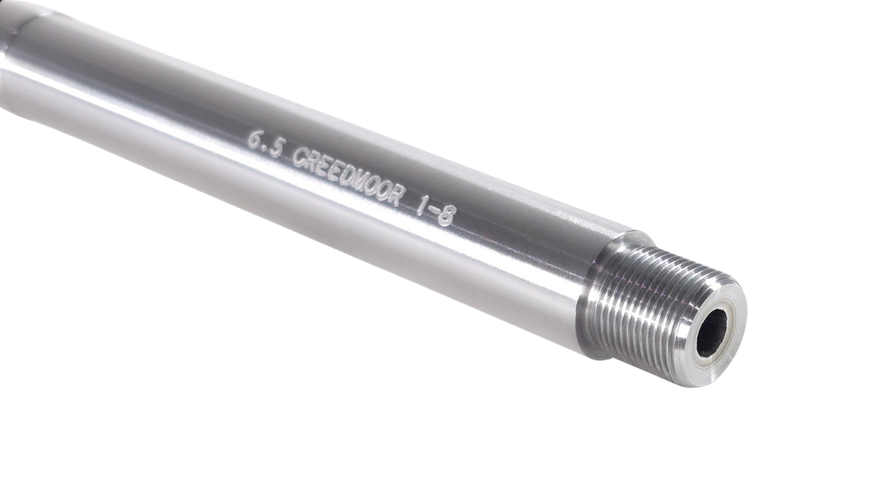
Why People Love or Hate the 6.5 Creedmoor: A Polarizing Cartridge in the Firearms World
Posted by Team AR15Elite.com on Jan 6th 2026

Welcome to Team AR15Elite.com's firearms blog, where we dive deep into the world of rifles, cartridges, and builds that push the boundaries of performance. Up today is a love-it or hate-it cartridge that has quickly risen to the top in popularity, the 6.5 Creedmoor. The 6.5 Creedmoor has become one of the most talked-about rifle cartridges in modern shooting circles. Introduced by Hornady in 2007, it was designed primarily for long-range target shooting and precision rifle competitions. Drawing from the .308 Winchester case but necked down to hold a 6.5mm bullet, it quickly gained traction for its impressive ballistic performance. With a high ballistic coefficient, flat trajectory, and relatively low recoil, the Creedmoor promised to bridge the gap between accuracy and manageability. Fast-forward to today, and it's a staple in hunting, competitive shooting, and even military applications. But for every enthusiast praising its virtues, there's a critic ready to dismiss it as overhyped or inadequate. In this blog post, we'll explore the reasons behind the love and hate, drawing from shooter experiences, expert analyses, and community discussions to paint a comprehensive picture of this divisive round.
A Brief History of the 6.5 Creedmoor
To understand the passion—positive or negative—surrounding the 6.5 Creedmoor, it's essential to know its origins. Developed in collaboration between Hornady and Creedmoor Sports, the cartridge was born out of a need for a more efficient long-range option that could outperform the venerable .308 Winchester in competitions without the heavy recoil of magnum cartridges. It uses bullets typically ranging from 120 to 147 grains, achieving velocities around 2,700-2,900 feet per second from a 24-inch barrel. This setup allows for supersonic flight out to 1,000 yards or more with minimal drop, making it a darling of the Precision Rifle Series (PRS) circuit.
Adoption exploded in the 2010s, with major manufacturers like Ruger, Savage, and Tikka chambering rifles for it. Ammo availability surged, and it found its way into hunting rifles for everything from varmints to big game like elk. By the mid-2020s, even military units, including U.S. Special Operations Forces and the UK Royal Marines, began integrating it into sniper rifles, designated marksman rifles (DMRs), and machine guns. This widespread use has only amplified the debates: Is it a revolutionary cartridge, or just clever marketing?

Why People Love the 6.5 Creedmoor
For its fans, the 6.5 Creedmoor represents the pinnacle of modern cartridge design—efficient, versatile, and user-friendly. Shooters from competitive marksmen to hunters swear by it, often citing its performance metrics as unbeatable in its class. Let's break down the key reasons why it's earned such devotion.
Superior Ballistics and Long-Range Performance
One of the primary draws is the cartridge's ballistic excellence. The 6.5mm bullets boast high sectional density and ballistic coefficients (often 0.5 or higher), which means they retain velocity and energy better over distance than many competitors. Compared to the .308 Winchester, the Creedmoor drops less and bucks wind more effectively, allowing for easier hits at 500-1,000 yards. In practical terms, this translates to flatter trajectories and less holdover adjustment, making it ideal for long-range shooting.
Competitive shooters love it for PRS matches, where consistency is king. As one enthusiast noted in a forum discussion, "The 6.5 Creedmoor is the GOAT of cartridges" for precision work, emphasizing its adoption by Navy SOF units for long-range engagements where it outperforms 7.62x51 NATO. Hunters appreciate this too; it delivers ethical kills on medium to large game without excessive meat damage. For instance, it's proven effective on hogs, with reports of clean harvests even at extended ranges. The low recoil—about 15-20 ft-lbs in a typical rifle—allows for faster follow-up shots and better accuracy, especially for smaller-statured shooters or those sensitive to kick.
Versatility Across Applications
The Creedmoor's appeal lies in its adaptability. It's not just a target round; it's a hunter's companion for everything from prairie dogs to elk. With bullet weights suited for varminting (lighter grains) or big game (heavier, like 140-grain ELD-M), it covers a broad spectrum. In North America, where shots can range from close-quarters woods to open plains, this flexibility shines. One hunter shared that they've taken deer, pigs, and coyotes with it, dismissing critics as "ignorant."
Military adoption further validates its versatility. U.S. SOCOM has expanded its use in rifles and MGs, citing flatter shooting, higher velocity, and reduced recoil compared to 7.62mm. This isn't just hype; ballistic tests show it maintains supersonic speeds longer, improving terminal performance at distance. For civilians, the wide availability of factory ammo from brands like Hornady, Federal, and Winchester means you can grab a box at most stores, unlike more niche cartridges.
Accessibility and Ease of Use
Unlike magnum rounds that punish the shooter, the Creedmoor is forgiving. Its moderate powder charge (around 40-45 grains) means less wear on barrels compared to hotter loads, though not as long-lived as .308 in some cases. Rifles chambered in it are often affordable, with entry-level options like the Ruger American Predator starting under $500. Reloaders love it too—the case design is efficient, and components are plentiful.
Community anecdotes highlight this ease. One user praised its low recoil for making them a better marksman, allowing practice without fatigue. It's also a great "gateway" cartridge for new long-range enthusiasts, as it doesn't require custom builds to achieve sub-MOA accuracy. In essence, it democratizes precision shooting, turning average Joes into capable long-rangers.
Proven Track Record and Innovation
Despite being relatively new, the Creedmoor has a solid resume. It's won countless competitions and been field-tested in real-world scenarios. Innovations like Hornady's ELD-X hunting bullets have addressed early criticisms of terminal performance, ensuring expansion and penetration on game. Fans argue it's an evolution of older 6.5mm designs like the 6.5x55 Swedish, but optimized for modern powders and rifles. This blend of tradition and tech appeals to those who value progress without abandoning proven concepts.

Why People Hate the 6.5 Creedmoor
On the flip side, the Creedmoor has no shortage of detractors. Much of the hate stems from its rapid rise to fame, which some see as undeserved. Critics range from traditionalists clinging to older cartridges to those frustrated by its limitations in specific scenarios. Here's a look at the common gripes.
Overhype and Bandwagon Effect
Perhaps the biggest complaint is that the Creedmoor is overhyped. Introduced amid a marketing blitz, it was touted as revolutionary, but skeptics point out it's similar to older cartridges like the .260 Remington or 6.5-284 Norma. As one article put it, the "hate" is a reaction to claims of it being "something new and different," when it's really just good marketing. Reddit threads echo this, with users calling it the "Creed of rifles"—solid but tiresome to hear about constantly.
The bandwagon effect amplifies this. As it became trendy, every gun store pushed it, leading to fatigue. One satirical video lists "10 Reasons to Hate the 6.5 Creedmoor," poking fun at nicknames like "6.5 Manbun" or "6.5 Needmore," implying it's for hipsters or lacks power. Traditionalists resent it for overshadowing classics like the .30-06, which they argue is more versatile for North American game without needing "finesse."
Perceived Lack of Power and Terminal Performance
For big-game hunters, the Creedmoor's lighter bullets (compared to .30-caliber) raise concerns about stopping power. While it excels at long range, critics argue it's undergunned for thick-skinned animals or quartering shots through brush. One hunter recounted issues with "stopping power" at a club, dubbing it "6.5 Needmor." Early ammo was mostly target-oriented, lacking diverse hunting loads, which fueled hate.
In military contexts, some question its adoption, citing higher pressure and weight issues in platforms like the Sig MCX Spear. Debates on shot placement versus caliber power highlight this: While precise hits kill reliably, real-world variables like angles or movement favor heavier rounds. Critics prefer .308 for its proven energy delivery, especially in shorter barrels.
Practical Drawbacks: Cost, Availability, and Barrel Life
Ammo isn't cheap—premium loads can run $1.50-$2 per round, more than .308 equivalents. Cheap options like Aguila have been slammed for poor accuracy, producing 5-inch groups in precision rifles. Barrel life is another sore point; the high velocities erode throats faster than milder cartridges, with some reporting 1,500-2,000 rounds before accuracy drops, versus 5,000+ for .308.
Availability, while better now, was spotty early on, frustrating adopters. Some hate it simply because it's "not old enough to be your grandfather's cartridge," lacking the nostalgia of .30-06 or .270 Winchester.
Cultural and Generational Backlash
There's a cultural element too. "Boomerism" and gatekeeping play roles, with older shooters dismissing it as a fad for millennials. One piece argues people hate it because "it's just too easy," making long-range shooting accessible without the skill grind of yesteryear. This "love to hate" dynamic is evident in forums, where it's mocked despite its merits.

Conclusion: A Cartridge Divided, But Undeniably Effective
The 6.5 Creedmoor polarizes the firearms community like few others. Lovers celebrate its ballistics, versatility, and ease, seeing it as a modern marvel that enhances shooting for all. Haters decry the hype, question its power, and lament its eclipse of classics. Ultimately, it's a tool—effective for long-range precision and ethical hunting, but not a one-size-fits-all solution. Whether you embrace it or eschew it depends on your needs: For prairie long shots or PRS glory, it's hard to beat. For heavy timber or nostalgia, look elsewhere.
If you're on the fence, try it yourself. Rent a rifle at the range, load up some quality ammo, and form your own opinion. In a world of endless cartridge debates, the Creedmoor reminds us that innovation sparks passion—love it or hate it, it's here to stay.
Why shop AR15Elite.com?
AR15 Elite has over 30 years of combined experience specifically in the AR-15 parts space. We build quality uppers for the AR-15 platform as well as AR-10(308) and AR-9 platforms. We have been an innovator in design and function for some time now with many of our ideas and designs still in wide circulation to this day. We are a leader in the AR-15 parts space with every part from muzzle to stock.
Shop AR15Elite.com with confidence, knowing that our experience in the industry and knowledge of our OEM products insure precise in fit and function of each and every part. We constantly keep our OEM machine shops in check with parts inspections and rigorous quality control.
We pride ourselves on delivering the best quality products at the best pricing to give our valued customers the best bang for their buck. We have hand picked each and every one of our OEM machine shops for exceptional quality and realistic pricing. We have very little overhead and as a result we are able to deliver a higher quality product than our competitors and while keeping prices low and reasonable.
Checkout our selection of upper assamblies here and thank you for shopping AR15Elite.com!